Luxury Hospitality Giant Shows Love

30-day Challenge – Day 7


Today, I am both glad and proud to write about a company, with which I have done business: both as a pre-MBA professional and as a consumer. I have to say that I wasn’t surprised when I came across this article announcing Hilton Worldwide’s initiative to give people around the world better access to the hygiene that can help prevent fatal illnesses such as diarrheal diseases and pneumonia.

In partnership with the Global Soap Project, Hilton Worldwide is leading the charge to help develop a cost-free way for hotels around the world to recycle left-over bars of soap, which are provided to guests during their stays. In the first year of this partnership, Hilton Worldwide expects this investment to result in the donation of more than one million new 4-ounce bars of soap to people in need. Learn how it works here. Continue reading

Luxury Out of Africa: Edun

30-day Challenge – Day 6

Today, I found another brand that cares about its social and environmental impacts. It’s also not surprising that this brand is associated with the LVMH family of brands (more than 65). One reason I admire LVMH is that it is a company that is comfortable with being the leader in just about every luxury segment. And now, Bernard Arnault is pushing his massive company past another frontier with Edun. Continue reading

Identifying Luxury Brands That Care

30-Day Challenge – Day 5

Since my last post, I have begun an investigative search to identify brands that actually care about the issue of responsible business. I am not talking about businesses that pay lip service to corporate social responsibility (CSR), but brands that truly try to act responsibly in all ways.  Continue reading

Should Luxury Brands Care?

30-Day Challenge – Day 4

Yesterday, I watched a documentary describing the tumultuous experience of workers in the garment manufacturing industry, as they campaigned for better wages and working conditions. Titled Made in LA, the documentary follows “three Latina immigrants working in Los Angeles garment sweatshops as they embark on a three-year odyssey to win basic labor protections from a trendy clothing retailer” (http://www.madeinla.com). 

While putting aside my political and economic views on the subject of immigration, my mind focused on the theme of responsible business – that is doing business the right way and ensuring that all who partake in commercial activities receive benefits (economic and otherwise) that are in line with their inputs. As this concept continued to stir in my head, I had a moment of pure enlightenment. Rather, it was an unanswered question: do brands (luxury brands in particular) care about the things I care about, specifically responsible business?

As the son of a diplomat, I’ve grown up an advocate of all things fine, unique and exclusive. If you think, I grew up with a silver spoon, then think again. My taste and refinement came as a result of the people and cultures, to which I was exposed. I was raised to understand that anything considered unique, exclusive, rare, and pleasurable had a right to be deemed luxurious. More importantly, I learned about the relativity of luxury – what might be luxury for me may be a staple for you. In third world countries, where ample food and water are especially rare and exclusive to the rich, wouldn’t they be considered luxury items.

So you might ask how does this all relate to a blog about an industry focused on goods that some will say are inaccessible to much of the world’s population? At this point I don’t know, but I intend to find out a little more in the coming posts.

Transforming Social Media to the “Bottom Line”

30-Day Challenge – Day 3

Yesterday, I highlighted one obvious problem brands face when employing social media in their marketing strategies. Today, I’m continuing that post with some focus on possible solutions.

Going Where Your Customers Go

Brands need to understand is that social media can influence the decisions of its consumers, especially in the longer term. Luxury companies should be more interested in it because it allows them to communicate with current and future customers. Rather than developing accounts on all the available platforms, companies can start by figuring out which social media tools are being used by their consumers. This reminds me of Mark Bonchek’s (SVP of Communities & Networks, Sears Holding Company) advice on sociographics.

The fact that social media exposes your brand to an exponential amount of customers (for whom you may not be able to count on for a future purchase) forces luxury brands to see it as a threat. Conventional perspective in the luxe space portends that social media could cheapen brands by exposing them to customers that don’t fit their target psychographics. However, if it is done right, social media can give your brand a connection to the next generation of consumers. It would help to mention Coca Cola and Pepsi at this point because both are such iconic consumer brands. These companies have done well in mining their own business intelligence to determine one of the critical times when beverage consumers are most likely to develop their taste preferences – in their college days. As such, Coke and Pepsi spend a lot of money, competing for the exclusive rights to sell their products on college campuses across the US (and obviously the globe).

In the same vane, social media has an influencing capability where users-turned-brand-advocates (evangelists), can help create brand desire within their networks. There is great opportunity for brands who start to view social media more as a long-term brand builder rather than a click-thru conversion enabler. In his article, Rony Zeidan (of RO New York Inc) says:

Advertising has been traditionally about making products desirable, about infiltrating the minds of people to create needs and fuel desire from one particular source. It communicates with consumers, promotes products, creates brand identity, and generates brand awareness.

Social media is the new tool of advertising, and it could be a better marketing tool than the interruptive conventions advertisers have used. I used the term interruptive because traditional advertisements (TV, billboards, and print) have formats that require your focused attention (away from the show or article you really wanted to watch or read) on what the brand is trying to tell you. Today, social media has the power of creating conversations that are user generated, allowing brands to be part of a more intimate and voluntary relationship with consumers. They may not have control over what people are saying, but brands surely have a more proactive capability to know and affect what the market really thinks about their products.

Social media has the potential to introduce brands – whether they are considered household names or deemed obscure –  to markets that were never accessible. It takes word-of-mouth marketing (the best ever for luxury products) a step further by amplifying the brand message. The only thing that that firms have to actively ensure, is that they are using the right social media tools to reach their target markets. To do that they need to go where the customers go.

I enjoy writing about these topics. Blogging is both cathartic and enlightening at the same time. Let me know if you’ve gained something from my perspective.

Connecting the Dots – Social Media and Luxury Brands

30-Day Challenge – Day 2

On my way to school this morning, I had a conversation with one of my classmates about the thin line bloggers and social media publishers straddle between overuse and underutilization of the social media apparatus. Since starting this blog, my objective has developed from just gaining exposure to the luxury goods and services segments, to making connections with people that have similar interests. I’m not worried about how many followers I have (make no mistake I am thankful for my handful); how many facebook “likes” I get; or how many people choose to comment on my posts. I am more interested in the discovery of other publishers, consumers, and readers who have an iota of perspective on the topics I discuss. Continue reading

Digital Marketing: “Apping It Up”

30-Day Challenge #1

I said I would have my first post in 24 hours, but I couldn’t hold the excitement of my first entry in the 30-day challenge.

While rummaging through my ever-thinking cerebrum for something to write, I found it difficult to focus on just one particular topic. I am interested in a lot of things, so why should I have to limit my posts to just one story or event in the world of high-end goods and services.

I decided to write on themes that are taking place in the luxury and retail space. Today’s theme is a pretty nebulous one: social media and digital marketing in the luxre (a pun resembling the offspring of luxury and retail; and also the name of my club at W&M ) space. Continue reading

Luxury in Asia

Prior to my articles on Patagonia and Saks Inc., I promised to deliver some interesting reads on luxury goods in Asia. I am now delivering on that promise with enough reading to keep you as busy as a W&M MBA student. Below are some some of my favorite reports/article on the Asian market for luxury from well the respected consulting firm, Mckinsey & Company. Some worthy reads over the weekend, with a pot of coffee (or tea) waiting in the wings. Enjoy…

Image

No seismic shift for luxury in post-quake Japan – May/June 2011
Although they were rocked by the Tohoku earthquake, Japan’s luxury consumers are back shopping—but with caution.

luxury goods in South KoreaKorea’s luxury market: Demanding consumers, but room to grow – September 2011
This year’s Luxury Consumer Survey addresses three key questions: Can South Korea keep it up? What’s changing? And what do these trends mean for the players in the luxury industry?

ImageFive questions for … Christophe Lorvo – May 2011
Christophe Lorvo, general manager of the Grand Hyatt Tokyo, answers questions about the global hotel business—and how to keep going after an earthquake.

ImageUnderstanding China’s growing love for luxury – March 2011
McKinsey’s in-depth annual report on the Chinese luxury market reveals two major trends: There are more luxury consumers, and they are more sophisticated.

A Chat with Steve Sadove, CEO of Saks, Inc.

Edmund Amoye with Steve Sadove (right) at HBS - 04/2011

Since assuming the leadership role at the Luxury and Retail Club at the Mason School of Business, I have had the opportunity to network with executives from different segments of the luxury and retail industry. My most meaningful encounter occurred in April, 2011 when I met Steve Sadove, CEO at Saks, Inc. at the annual Retail and Luxury Conference at Harvard Business School. I kept in touch with him over the summer, and last month (Oct. 2011), Mr. Sadove (SS) spoke to me (EA) in his New York office about leadership, his company and industry, customer trends, career opportunities, and the job of CEO at a company with a market capitalization of about $1.7B (11/7/11). Below are excerpts from our conversation. Continue reading

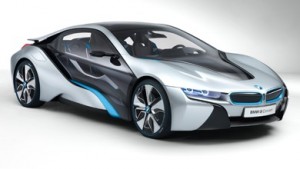
BMW’s Car of The Future: Glued, Screwed & Rented – Forbes

BMW’s Car of The Future: Glued, Screwed & Rented – Forbes.

Take a look at the article above highlighting BMW’s attempt to answer consumer demands of the future. Would you like to drive these cars?

BMW i8

BMW i8

BMW i3

BMW i3

Fine Wines and Luxurious Accommodations in Virginia

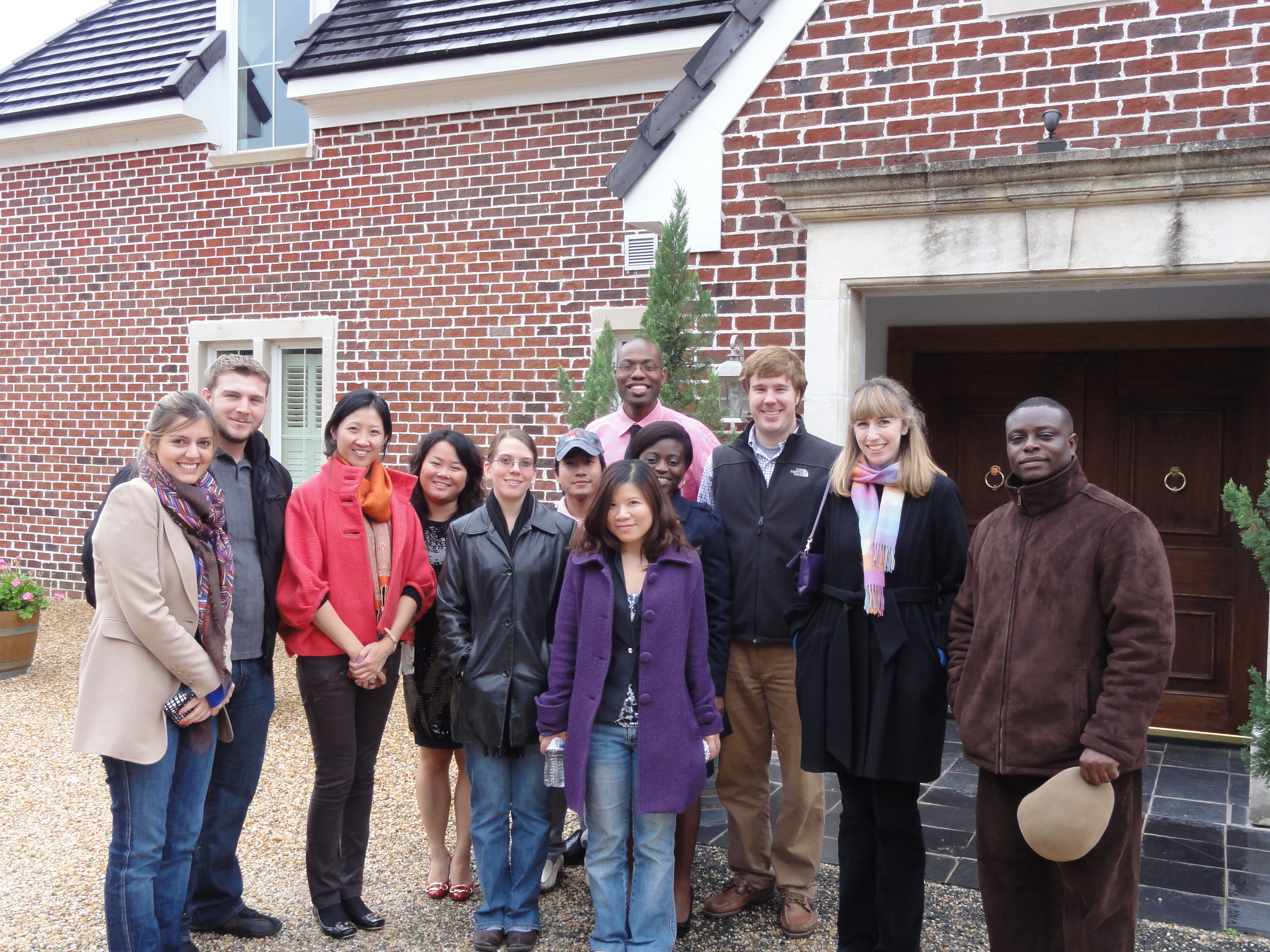
Luxury and Retail Club members with Kristen Duffeler (5th from left)

Pictures

Last Friday (10/28/11) the Luxury and Retail Club (at The Mason School of Business) went on a company visit to The Williamsburg Winery and Wedmore Place located at 5800 Wessex Hundred, Williamsburg, VA. As a club, we thoroughly enjoyed the opportunity to sample wines from the largest winery in the state of Virginia; and see the luxurious accommodations at a European style hotel. We also found out more about the hospitality, and the wine & spirits business segments. Our itinerary for the day included: a tour of Wedmore Place with Kristen Duffeler (GM of Wedmore Place and In-house Counsel for The Williamsburg Winery); a tour of The Williamsburg Winery with Courtney Darden (Assistant VP of Marketing, The Williamsburg Winery); and a Q&A session with the Patrick Duffeler I (family patriarch and founder of The Williamsburg Winery and Wedmore Place) and Patrick Duffeler II (current President & COO of The Williamsburg Winery).

Continue reading

“Patagonia @ W&M” was a Huge Success

You should have been there to hear Tetsuya O’ Hara speak about what Patagonia is doing to develop a sustainable competitive advantage. We will have pictures and videos out soon to show you all the exciting things that were discussed.

If you attended the event, please let us know what you thought in the comments section below.

Patagonia at William and Mary

Mason School of Business Luxury and Retail Club

What: Luxury and Retail Club Speaker Series – Tetsuya O’ Hara, Patagonia
Topic: Sustainable Competitive Advantage
When: Oct. 26, 2011 from 12:30pm to 2pm
Where: Brinkley Commons, Miller Hall – 101 Ukrop Way, Williamsburg, VA 23185
Who can attend: All W&M students, faculty, and staff

Please RSVP if you plan on attending: https://forms.wm.edu/3269

Continue reading

On the Radar: Upcoming Posts

Sorry I haven’t posted in a while. I have been travelling since the 9th and have not been stable enough to write a good post. I will have some interesting stuff on the blog in the next few days.

Mason School of Business Luxury and Retail Club

Luxury Retail in The Big Apple (do people still call it that?) – I made a trip to New York to get a taste of the city and meet with one of luxury’s foremost leaders, Steve Sadove (CEO of Saks Incorporated). Keep refreshing your page in the coming days to get Steve’s perspective on leadership, reasons for Sak’s recent performance, and emerging trends in luxury retailing.

Patagonia: Using Business to Solve Environmental Problems – The Luxury and Retail Club at William and Mary is proud to host Patagonia on 10/26/11 at the Mason School of Business. Come back for more details on our club event featuring Tetsuya O’ Hara, Director of Advanced Research and Development at Patagonia.

Following the People: A Pictorial Journey of How Luxury Brands are Literally Following The Travelling Customer

Entrepreneurs, Longhorns and Barbecue in Austin, TX – After visiting New York, I took a fabulous trip with my MBA classmates enrolled in the Entrepreneurship program at William and Mary. We had such a great time meeting with venture capitalists, entrepreneurs, and CEOs from one of the world’s most fertile regions for technology startups. Since that isn’t the focus of this blog you’ll have to follow me on twitter (@edmundamoye) or on the Mason School of Business blog to get the scoop.

I invite students at the W&M MBA program to contribute to this blog. You can write about anything that is related to any of the major segments of luxury and retail:

  • Wines and Spirits
  • Travel and Hospitality
  • Auto
  • Jewelry (including watches)
  • Perfumes and Cosmetics
  • Specialty Retail
  • Fashion and Apparel
  • Real Estate
Thanks for your patience.

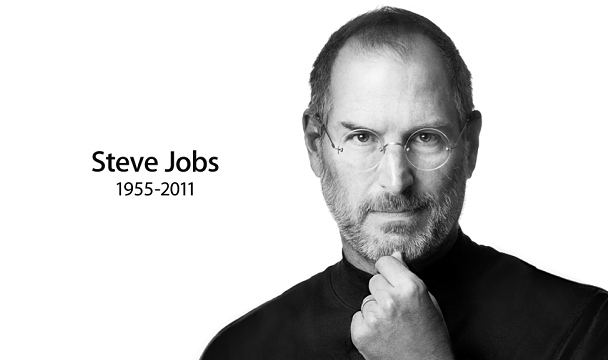
Marketing 101 from The Late Steve Jobs

He changed the world.

Article – Apple’s Steve Jobs Passes Away

I had to interrupt my Asia focus for this.

Many, if not all MBA students have come across Apple in their case studies or in their purchases. So, in honor of the late Steve Jobs, a man likened to Thomas Edison and Walt Disney, I’m posting this article from Luxury Daily. The article discusses the components of Apple’s successful strategy to enter every aspect of our lives.

I doubt any of our readers will wonder about the connection between Apple and luxury goods. I venture to say that the principles that led to Apple’s dominance apply to ALL luxury brands. I highly encourage my fellow MBAs to pay religious attention to the marketing components discussed in this article.

I’d love your comments (link below title) on how you think Steve Jobs’ death will affect the world.

Video from CNN.com

Audi India posts 84 pc rise in September sales – The Economic Times

Audi India posts 84 pc rise in September sales – The Economic Times

In my continuing focus on Asia, I’d like to bring attention to rising car sales in India. Audi just announced it increased sales in September. Though the numbers are not in the thousands, it does say something about the increasing demand for the upscale automotive experience in Asia.

Focus On Asia

For this week’s posts, I am going to focus on issues surrounding luxury goods in Asia. In some short paragraphs, I’ll introduce news topics surrounding the Asian market, where brands are pushing hard to establish a presence.

Gucci, Tiffany target Chinese banks in piracy law suits 

You have probably heard the phrase “imitation is the best form of flattery”. While that is true for many things, piracy in China bears huge costs for US firms – between $2.5 billion and $3.8 billion per year. In this article from Reuters, Emily Flitter discusses new developments in attempts by luxury brands to eliminate piracy.

Piracy and counterfeiting are huge “value leakers” for high-end brands, but in a strange twist of irony they can also serve to proliferate a brand (only at lower product prices and brand value).

The Rising Cost of Luxury In Asia

In the MBA program we are exposed to the macroeconomic dynamics of purchasing power parity (PPP). PPP is a figure that tell us if a big mac is more expensive in Brazil, than in China. Well, luxury goods have their own metrics, tracking the price of a basket of luxury goods across world markets. While Forbes Magazine uses the Cost of Living Extremely Well Index, Julius Baer’s August 2011 Wealth Report: Asia brings a new indicator to the party of economic indices. According to the Swiss private banking firm, the the price of luxury goods is up 11.7% in dollar terms in the four big markets of Hong Kong, Singapore, Shanghai and Mumbai. What is even more important is that prices have risen far faster than generic inflation in these cities. Want to know where to get the best price on a Chanel bag? Click here.

What do LVMH and L’Oréal Have in Common with Google, KPMG, and Deutsche Bank?

BusinessWeek published the results of a survey from Stockholm-based research firm Universum. The company asks more than 160,000 business and engineering students in the biggest markets, from Brazil to China to the U.S., to identify what they regard as top employers. Guess which luxury brands were ranked.

LVMH

Headquarters: Paris
Employees: 83,542
Industry: Luxury Goods
2011 Rank (2010 Rank)
Business: 27 (39)
Engineering: NR (NR)

From Louis Vuitton to Tag Heuer to Moët & Chandon, LVMH (MC:FP) defines luxury across 60 brands, 2,500 stores, and more than 80,000 employees. The company offers training, talent development, and opportunities for internal mobility.

L’Oréal

Headquarters: Paris
Employees: 64,643
Industry: Cosmetics
2011 Rank (2010 Rank)
Business: 13 (11)
Engineering: 22 (29)

New employees at French cosmetics, beauty products, and perfume company L’Oréal (OR:FP) are tracked into the L’Oréal FIT program, a two-year, personalized program for starting a career at the company, which emphasizes development. Each year, 4,500 employees shift positions within L’Oréal, according to its website.

Top properties of the best employers include: flexible work options, great benefits, mentoring. To get more specific, check out The American MBA Survey from the same company. The MBA survey ranks the attractiveness of US employers amongst MBA students.


Tiffany Engagement Worth $12 Billion in Takeover as Alliance Up: Real M&A – Bloomberg

Bloomberg Article

I am sure this post will attract some attention from my colleagues seeking positions in the financial services industry. Considering that luxury brands are making bold expansionary moves into Asia, I think there is an opportunity for MBAs of all disciplines to enter this industry, which is forecasted to grow 8% this year. According to Mckinsey, China’s luxury market is expected to grow 18% a year from 2010 to reach 20% of global sales in 2015.

At $12B, the Tiffany acquisition is one reserved only for a few luxury players such as LVMH and Richemont. I would venture to say that with the way news spreads in the industry, both groups may have already done their due diligence on the potential deal.

Rising Commodity Prices: A Lesson in Managerial Economics

I just read an article in BusinessWeek that is very applicable to what I am learning at the Mason School of Business. In the wake of the recent financial woes, luxury goods manufacturers are facing a problem of rising commodity prices. Though luxury consumers have resumed their spending habits, there is a demand side component that is still causing the price of inputs like leather to go up. A worthy read for those interested in managerial economics.

Conde Nast – 2010 Business Traveller Awards

The business segment constitutes a vital profit segment of the travel and hospitality industry. As you try to zoom in on a couple of companies to apply for internships and full time jobs, take a look at the 2010 Business Traveller Awards by Conde Nast. These are the top-rated hotels catering to business travelers. Click the picture for the full results.

Resource – Digital Strategies for Luxury Brands

Here is an interesting slideshow I found about how you can leverage digitized strategies for luxury brands. Enjoy…

2011 FT Business of Luxury Summit – Reports and Videos on What was Discussed

FT Business of Luxury 2011

The Financial Time recently concluded its 2011 Business of Luxury Summit in Lausanne, Switzerland. This year’s theme was “What Price Luxury”. If you’d like to catch up on issues being discussed by luxury leaders, take a look at the WSGN PDF reports below:

I am one who learns a lot from video and pictures. So if you would like to get the gist of the summit via video click here. Scroll down to the bottom for the videos. I hope they help you as they have me.

I’ll be posting links to other reports on specific segments of the luxury market. Subscribe to the blog or follow me on Twitter to get notices of new posts.

Across the Board – 9/19/11

LVMH acquisition of Hermès not inevitable: experts

LVMH CEO, Bernard Arnault has been hoping to acquire Hermes for sometime now – years. Considering that Hermes recently got approval from a Parisian court to transfer its shares to a private holding company; what does this mean for LVMH’s progress in acquiring the family-owned saddler and leather goods manufacturer. It is possible Arnault may just stay put with his 21.4% of Hermes and get the benefits of owning some of the Hermes name.

Audi uses A6 campaign to highlight national driving issues

Audi is promoting its A6 through broadcast, print and digital channels. What is interesting is the approach of the campaign. Audi is highlighting its efforts at “Making the road a more intelligent place”. The brand’s ads address how the A6 provides solutions to drivers facing various road and driving conditions in the US. Did you know that “38 million drivers on the road today would not pass their state’s driver’s exam?”

For more, see the video from Luxury Daily below.

Wealthy Online Shoppers Rank Top Luxury Retailer Websites; Nordstrom Is Most Visited While Barneys, Bergdorf and Brooks Brothers Tie for First Place Along With Net-A-Porter

Article – Wealthy Online Shoppers Rank Top Luxury Retailer Websites…

In one of my former posts, I commented on the impact of online sales channels on traditional retailers. In another post, I commented on the great demographic divides that separate online users. Older consumers are more eager to use online and e-commerce portals, while it seems younger and up-and-coming customers are more willing to pay full price for luxury items.

The article cited at the top of this post is another datapoint that tells us which retailers may or may not be doing as well in cyberspace. In general, the article justifies the use of online retailing to supplement established brick-and-mortar store revenues.

From Gen Y To Seniors, Luxury Fashion Spend Rises

Runway-Photo

Article: MediaPost Publications From Gen Y To Seniors, Luxury Fashion Spend Rises 09/16/2011.

I wish I could get my hands on this report. Seems like it would be a great read for those of us who will serve these customers in the future. It would be a great way to get an inside track on what business leaders are dealing with. As an MBA who is graduating in May 2012 (keep that in mind if you are looking for a great leader – i.e, ME), it will be my job to tap into the rich analytics developed by firms like AMEX and Mckinsey to create the new business models that help businesses innovate. Continue reading

Ferraris on the Vine at The Williamsburg Winery

Last April, I had the pleasure of attending a superb event at The Williamsburg Winery. Ferraris on the Vine brings the best in the auto world to Williamsburg. The 2011 theme was Ferrari vs. Ford. Look out for the 2012 edition.

Check out the website and my photos at http://ow.ly/6vVnX.

The interactions I had with auto connoisseurs and enthusiasts were incredible. The car pictured above is a 1958 Ferrari Ellena. I met the owner, and he told me a little about the car. Continue reading

Arnault Picks up Yogurt Mogul for New Louis Vuitton CEO

Article – http://ow.ly/6vuwl

So LV will have a new CEO after current CEO, Yves Carcelle leaves at the end of 2012. This is a big deal for a brand that brings in a substantial amount of LVMH’s revenues. I wonder what made Arnault hire an executive from the dairy industry. He must bring some really important skills to the table. Continue reading

Is Digital Killing the Luxury Brand? | Adweek

Article – Is Digital Killing the Luxury Brand? | Adweek.

One of my most inspring professors sent this article to me yesterday. The write up from AdWeek talks about how new online retail channels may not be delivering the same value as brick and mortar distribution. Continue reading

Saks CEO Passes on Discount Rack – WSJ.com

Article – Saks CEO Passes on Discount Rack – WSJ.com.

If you read my last post on Steve Sadove, this is a good article for you to find out what is going on in luxury retail. Click the article link above to read about what one high-end retailer is thinking.